|
|
|
|
|
|
|
|
|
|
|
|
|
|
|
|
|
|
|
|
|
 |
|
|||||||||||||||||||
|
 |
 |
 |
 |
 |
 |
|
|||||||||||||
 |
 |
 |
|
|||||||||||||||||
 |

|
 |
 |

NSF Program Announcement Research Activities MARGINS-NSF Awards Event Response Policy Data Policy Data Server Post-Doctoral Fellowships Related Websites
|
 |
 |
 |
|
||||||||||||
 |
 |
 |
 |
 |
 |
 |
 |
|
||||||||||||






Biographies of MARGINS Post-Doctoral Fellows
Since 2003, the MARGINS program has funded a number of post-doctoral fellows, both within the special MARGINS Post-Doctoral Fellowship and within the regular NSF-MARGINS programs. Below are biographies of the current and former post-doctoral fellows.
Return to Post-Doctoral Fellowships
CURRENT FELLOWS
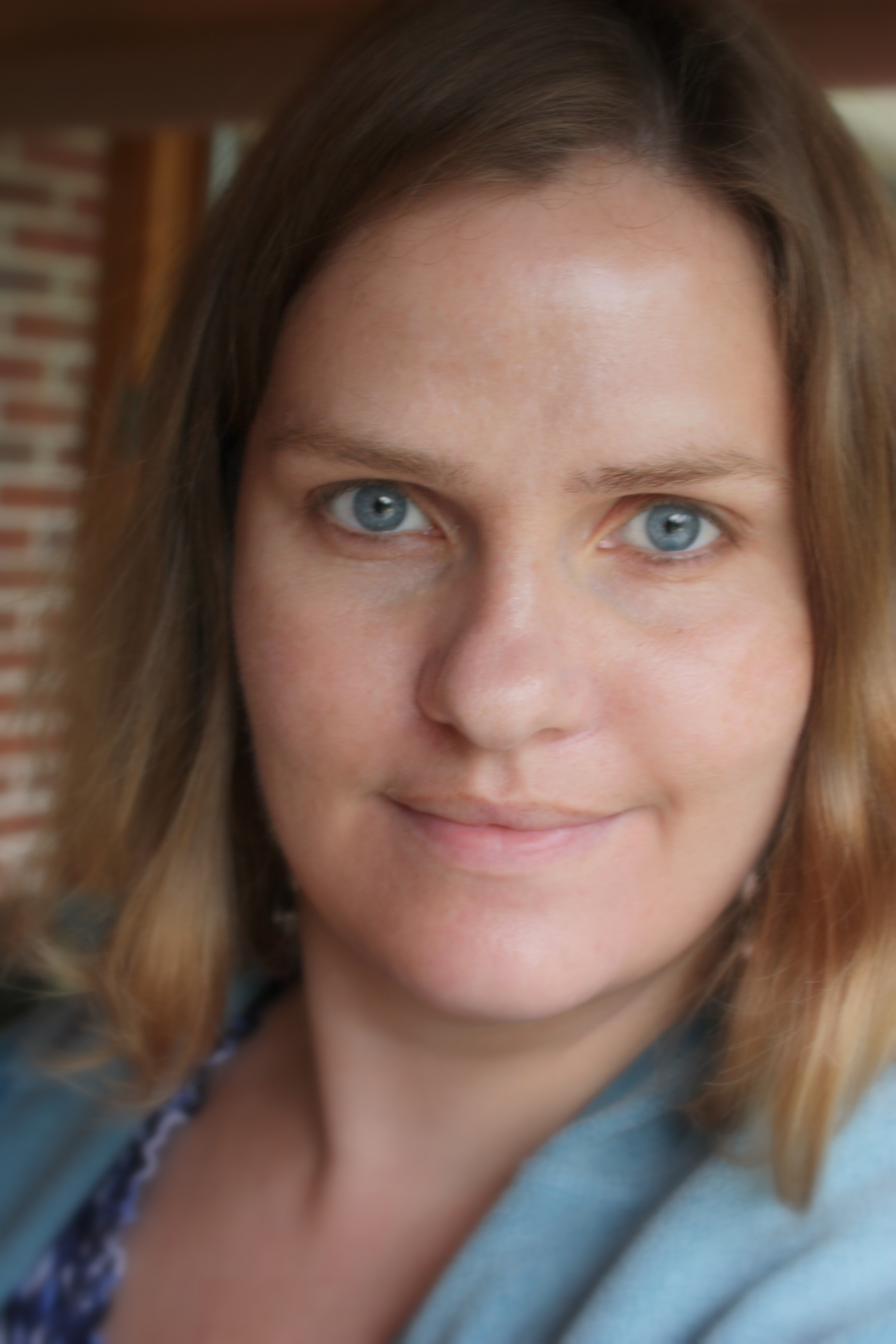
Tara Kniskern
 |
|---|
College of William and Mary
MARGINS Postdoctoral Investigating sediment dynamics on the Waipaoa River Shelf, New Zealand: Creating a framework to predict preservation on continental margins (NSF Award 0948319)
The physical, biological, and chemical processes that shape continental margins act on time scales ranging from hours to millennia to millions of years. The relative magnitude and spatial scale of these processes is influenced by climate, sea level, proximity to fluvial sources, antecedent geology, tectonics, hydrodynamics, and, increasingly by anthropogenic effects as the majority of the world’s human population resides in coastal areas.
During my graduate work with Steve Kuehl and Courtney Harris at the Virginia Institute of Marine Science (VIMS), I investigated sediment transport and deposition within both estuarine and continental shelf environments. While using radioisotope geochronology to describe deposition in the York River estuary, Virginia, I became intrigued by numerical modeling results by another VIMS student that answered lingering questions such as the lack of recent deposition in a particular stretch of the estuary. To answer my dissertation research questions, I therefore combined geochronology with numerical modeling to study sediment dispersal offshore of the Waiapu River shelf, New Zealand. Using these two techniques, I found that the timing of oceanic conditions during floods played an important role in transport and deposition on the Waiapu River shelf. In particular, hourly changes in wave conditions influenced the fraction of the flood load deposited on the shelf as well as the location sediments were initially deposited.
I continued to explore the implications of this facet of my doctoral work during a post-doctorate with Jon Warrick at the U.S. Geological Survey through the University of California, Santa Cruz. I examined river-ocean coherence on hourly to seasonal time scales of 4 river-shelf systems along the U.S. West Coast: the Umpqua, Eel, Salinas, and Santa Clara. Each system displayed characteristic seasonal patterns in the magnitude and timing of river discharge and concurrent oceanic conditions. These findings have important ramifications for how we investigate sediment and carbon dispersal and deposition.
I intend to address some of these issues during my MARGINS post-doctorate with Courtney Harris at VIMS. The goal of my research is to understand how temporal variability of river-ocean timing, antecedent geology, and fluvial load influence sediment transport and flood bed formation and preservation. This work includes both a field component on the Waipaoa River shelf, New Zealand, and a numerical modeling component wherein I will design experiments to examine how margin-scale variability may influence transport and deposition. The Waipaoa River obligingly flooded at the end of January 2010. With help from Alan Orpin (NIWA), and others, we were able to collect sediment samples in February, 2010 that appear to show flood deposition within x-radiographs and geochronological tracers. I am grateful for the opportunity provided by the MARGINS post-doctoral program and look forward to completing my research goals.
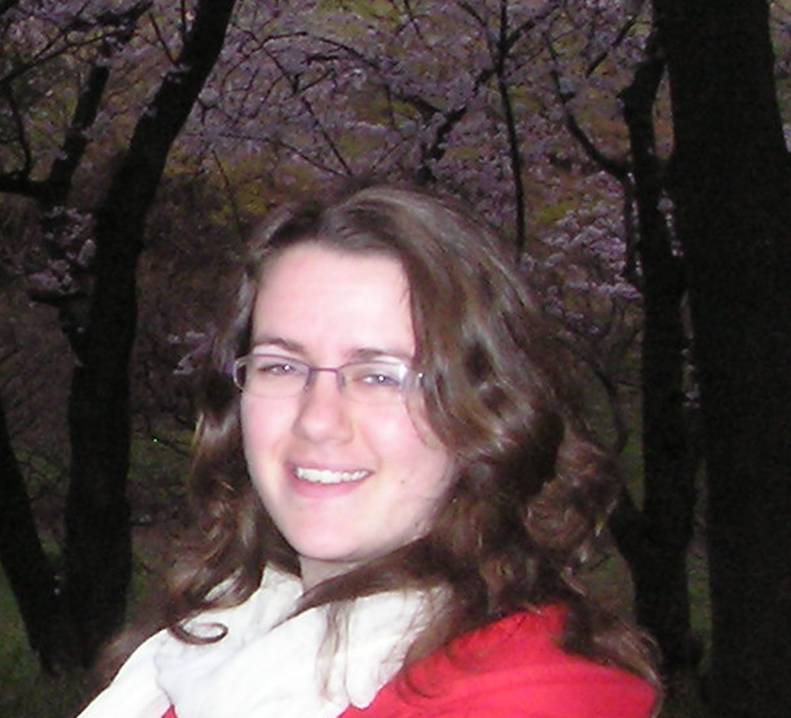
Joann Tudge
 |
|---|
MARGINS Postdoctoral Fellowship: Characterization of fault zone sediments from borehole logging data at the Nankai Trough, IODP NanTroSEIZE Project (NSF Award 0948292)
In areas that produce high magnitude subduction earthquakes it is only through accessing the interior of active faults and in-situ monitoring that earthquake mechanics can be fully understood. Borehole logging data allows access to the fault rocks in-situ and can provide specific information on their composition, physical properties, consolidation state and temperature. By targeting the seismogenic portion of a plate boundary, or megathrust within a great earthquake producing subduction zone, we can begin to observe the hydrogeologic behaviour of subduction zones and the associated aseismic-seismic transition.
The transition from aseismic to seismic slip is thought to be controlled by fault zone composition, sediment consolidation state, pore-fluid pressure and normal stress magnitude. By drilling a transect across a subduction zone, from the initial undisturbed sediments, through the trench wedge and shallow plate fault system, to the deep seismogenic zone, the changes that occur as the sediments are transported to higher pressures and temperatures can be investigated.
Since core recovery around fault zones is not always reliable, borehole logging data can fill the gap and provide information on the physical properties of the rocks across the subduction zone (e.g. clay composition, fluid composition, pore pressure, thermal state).
As a MARGINS postdoctoral fellow I will be spending the next two years at the University of Wisconsin-Madison, working with Harold Tobin. I plan to study the borehole logging data from IODP drill sites at the Nankai Trough, Japan. This research fits into a much larger on-going international collaborative project: the Nankai Trough Seismogenic Zone Experiment (NanTroSEIZE). This project aims to investigate fault mechanics, fault development and the seismogenic process at the Nankai Trough; where the Philippine Sea Plate is subducting beneath Japan.
Throughout my undergraduate degree, at the University of Leicester, U.K., I was aware of the Integrated Ocean Drilling Program (IODP) and during my doctorate I was given the opportunity to sail. In the autumn of 2007 I joined a team of scientists on the maiden voyage, for IODP, of the Japanese drilling vessel Chikyu. The destination was the Nankai Trough, offshore Japan, for the first stage of NanTroSEIZE. 57 days at sea, 6 boreholes and a lot of logging-while-drilling (LWD) data later I was hooked. In September 2009 I was back out on the Chikyu, for Stage 2 of NanTroSEIZE, this time drilling the undeformed sediments of the seaward Shikoku Basin.
Since the future stages of the NanTroSEIZE project plan more drilling than coring it is necessary to develop a log-based lithostratigraphy capable of identifying sediments within the subduction zone. Over the next two years I will work at integrating the borehole logging data and coring results from NanTroSEIZE Stages 1 and 2 to develop a transect-wide petrophysical understanding of the materials in the subduction system. It is hoped that this research will have a significant application to future work in this area.
I am excited to have this opportunity to hop across the pond and further my research into fault characterization from borehole logging data, and become more involved in the NanTroSEIZE project scientific community.
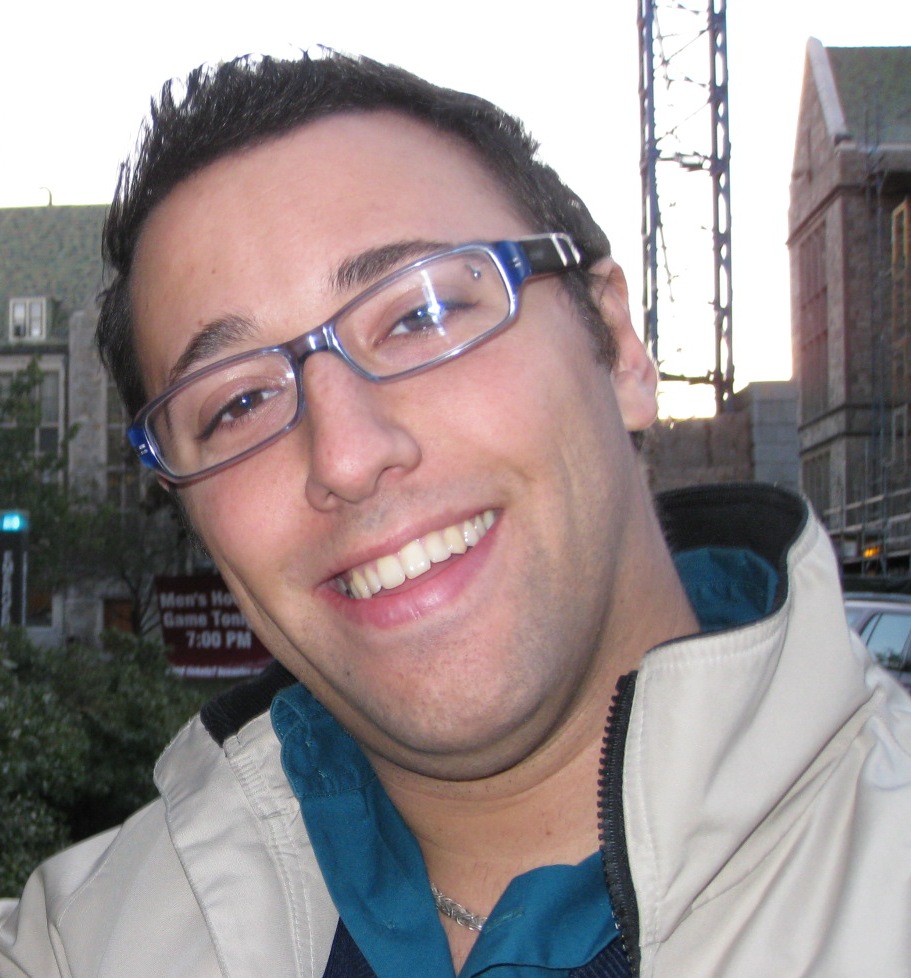
Alberto Canestrelli
 |
|---|
MARGINS Postdoctoral Fellowship: A synthesis model for the Fly River dispersal system, Papua New Guinea (NSF Award 0948213)
My Phd research at University of Padua (Italy) focused on numerical modelling of hydrodynamics and morphodynamics of rivers and coastal areas. During the third year of my Phd I also spent six months at Boston University working with professor Sergio Fagherazzi. My research at BU focused on the hydrodynamics of the Fly River delta (Papua New Guinea) and in particular on the distribution of bottom shear stresses and erosional power within its distributary channels.
During my MARGINS post-doc I will combine numerical modelling with the ongoing research activities in the Fly River system. The goal is to model the fate of sediment from source to sink starting from the upland areas to the continental shelf. I would like to extend my modelling framework to both directions, in the hillslope to model the delivery of sediments to the river from landslides, debris flow and mass wasting processes and in the continental shelf to model the morphology and filling of incised submarine valleys and the progradation of the delta clinoform on the shelf. The research will thus couple terrestrial processes to marine processes, favoring an interdisciplinary approach to the study of the Fly River system. A coupled fluvial-tidal model for large rivers can be used as a predictive tool to assess the impact of climate change, sea-level oscillations, and human activities on coastal areas. Simulation results will have a global relevance, showing how large tidal rivers respond to external disturbances and how sediment discharge signals are modulated in the lower reaches of tide-dominated rivers. The research will be characterized by the improvement of the existing numerical methods and by creation of new instruments. I believe that a high resolution numerical model that follows the flow of water and sediments along the river is a wonderful opportunity to combine all the MARGINS S2S research efforts in this integrated model. In fact, on the one hand this model will incorporate all the data collected in the Fly River system, on the other hand it will provide important information on hydrodynamics and sediment transport that can be used as reference for future field campaigns in Papua New Guinea.
PAST FELLOWS
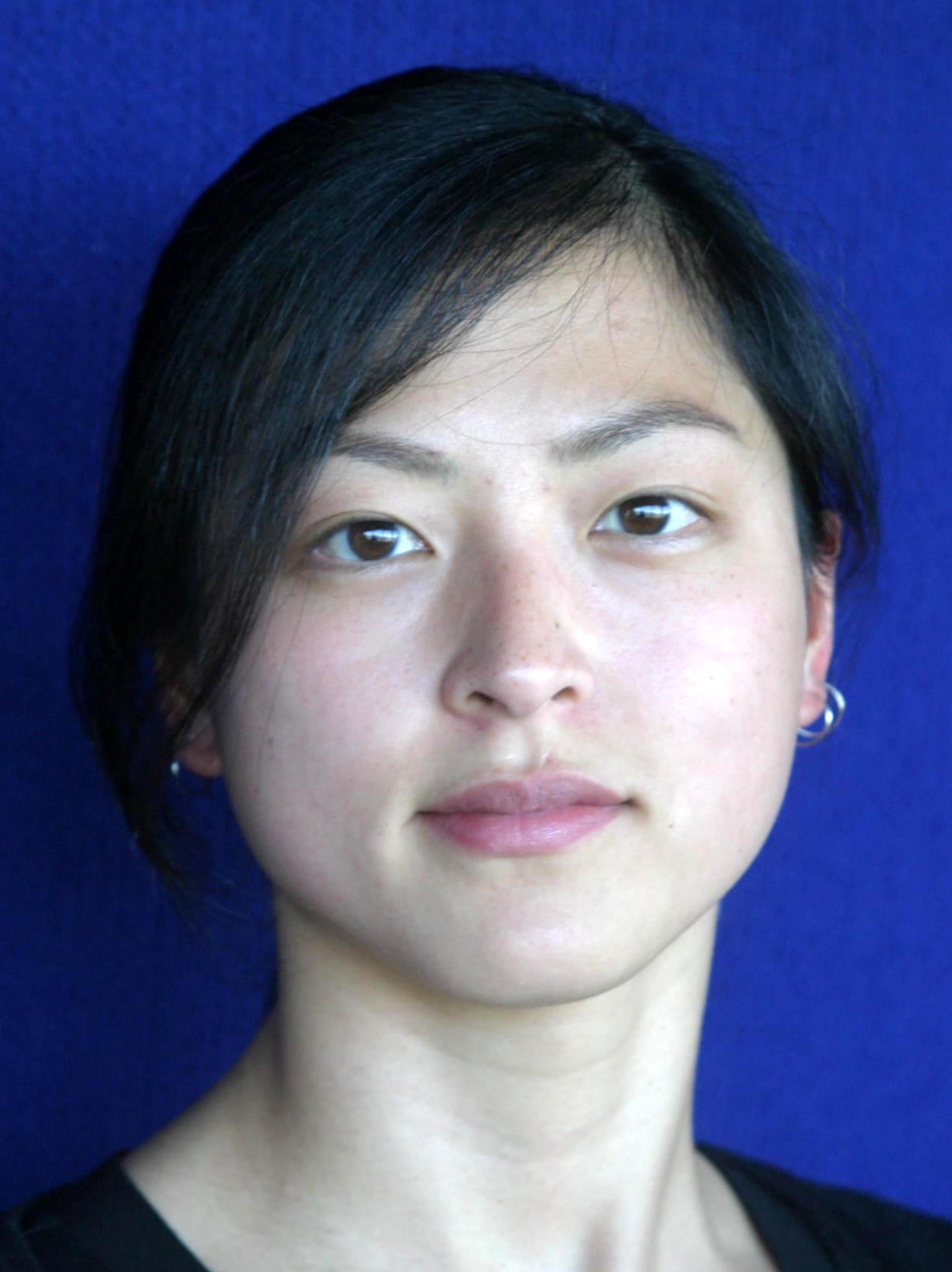
Ikuko Wada
 |
|---|
MARGINS Postdoctoral Fellowship: A Synthesis of the Physical State of the Mantle Wedge in Costa Rica-Nicaragua and Izu-Bonin-Mariana (NSF Award 0840800)
Temperature is a prim / ary factor that controls many important geophysical processes in subduction zones, including earthquakes and arc volcanism. The subduction zone thermal structure is strongly influenced by solid-state mantle wedge flow, which is driven largely by viscous coupling between the slab and the overriding mantle. Geophysical observations, such as surface heat flow, indicate that this flow is absent in the most seaward part of the forearc and therefore that the slab and mantle are decoupled. During my doctoral research with Kelin Wang at the University of Victoria and the Pacific Geoscience Centre, Geological Survey of Canada, British Columbia, Canada, I investigated the effect of slab-mantle decoupling on the wedge flow and thermal structure through numerical modeling. The model results revealed that a weakened interface relative to the strength of the overriding mantle always leads to complete stagnation of the mantle due to the strong sensitivity of the mantle strength to temperature and that the mantle either does not flow at all or flows at full speed. This bimodal flow behavior results in a strong thermal contrast between the stagnant and flowing parts of the mantle wedge. Using heat flow data and other geological and geophysical constraints, I found that the maximum depth of slab-mantle decoupling is 70-80 km for most, if not all, subduction zones. The recognition of the importance of the maximum depth of decoupling provides important implications to the study of subduction zone geodynamics. As a MARGINS postdoctoral fellow, I will start the next stage of my research at Woods Hole Oceanographic Institution with my mentors Mark Behn and Alison Shaw in November 2009. My research will focus on the physical state of the mantle wedge, which is controlled not only by mantle flow, but also by other processes such as hydration, melting, and the evolution of mineral grain size. I will investigate how these processes take place in the mantle wedge using numerical models and a wide range of geophysical and geochemical observations made in the two MARGINS SubFac Integrated Study Sites, the Izu-Bonin-Mariana and Costa Rica-Nicaragua margins. I am excited to have this opportunity to pursue my research in subduction zone geodynamics.
Christie Rowe
 |
|---|
MARGINS Postdoctoral Fellowship:Fluidization of Very Thick Granular Layers in Ancient Thrust Faults (NSF Award 0840977)
I am going to spend the next two years studying transient fluidization of granular fault rocks in Alaska and Namibia, working with Emily Brodsky at UC Santa Cruz to investigate he rheology and behavior of such rocks, and the implications for co-seismic weakening in shallow crustal faults. Thank you NSF/MARGINS! I am a field geologist and love messy and complex systems. Working with Emily, I am learning how to simplify and quantify my field observations to extend my ability to use outcrops of old exhumed faults to understand how modern faults slip - and how evidence of ancient seismic slip can be detected in the rock record.
My undergraduate research at Smith College was on blueschists and eclogites from the Franciscan Complex in California. Some of my samples came from some mélange terranes, where I remember thinking I would never work again because the rocks are so “ugly”. After a couple years in the leaky petroleum tank removal business, I went to UC Santa Cruz to study with J. Casey Moore. Casey and I went looking for preserved strands of the plate boundary faults in the subduction complex on Kodiak Island, Alaska. We looked at the low-temperature evolution of subducting sediments at the top of the seismogenic zone which dominate the décollement surface at shallow depths in many plate boundaries, looking for the key reaction which causes the aseismic to seismic transition when the décollement is at about 100-150C.
Talk about “ugly” rocks! Kodiak is a pile of sheared, low-grade turbidite mélanges - mostly dark grey rocks with dark grey shear zones and blackish faults, which are hard to study when it ’s raining all the time. It wasn’t until my second field season on Kodiak that the sun came out for a few days. This was pretty lucky because when the outcrops dried we realized there were some very strange black fault rocks exposed there. With (then post-doc) Francesca Meneghini, I spent the next few years working on these rocks and discovered that they are thick layers of very finely banded pseudotachylytes and microcataclasites that we think formed during earthquake slip. They formed when rupture propagated through granularcataclasites and mélanges, not through intact rock. Akito Tsutsumi (U. Kyoto) has had some success in experimentally producing friction-induced melting in these soft rocks, implying that sufficient frictional heating can occur even when the rocks are assumed to be relatively weak. The seismic fault rocks are recycled during slower, distributed slip into clasts within the thicker fault zone fabrics, preserving repeated cycling of slow, distributed creep and fast, localized slip - a snapshot of the earthquake cycle from an early Paleocene plate margin.
When I was finishing my PhD, I met Emily Brodsky who was then moving to UCSC. She recognized that my field observations of fault rocks could be used to quantitatively constrain aspects of fault rock flow. Working together to investigate the rheology of the fault rocks during seismic slip was really exciting and opened up a whole new area of research for me.
I moved to University of Cape Town in a tenure-track position to teach structural geology, mapping and tectonics. Exposure to the incredible geology of southern Africa exploded my research interests into several new areas, including soft sediment deformation, nappe emplacement and continental orogeny. My collaborator Jodie Miller introduced me to the Naukluft Nappe Complex in central Namibia, where sparce vegetation and incised topography (coupled with extreme heat) can sometimes make it feel as if one is mapping inside a 3D seismic volume. I was excited to discover that the sole thrust of this 500Ma nappe complex displayed some similar textures to those I had seen in other faults, which have not yet been studied in adequate detail.
When I decided to move back to the US, Emily and I proposed this MARGINS Fellowship to study the fault rocks in Pasagshak (Alaska) and Naukluft (Namibia). Both these thrusts are low angle faults which were active at shallow depths and low temperatures which show textural evidence of very thick (meters to 10m) granular layers which were transiently fluidized. If this fluidization occurred during seismic slip it could dramatically weaken the fault zone. The very similar textures found in the subduction thrust (Pasagshak) and continental nappe sole thrust (Naukluft) suggest that this phenomenon can occur in diverse tectonic settings.
With fourth-year students from UCT, I am mapping and documenting deformation structures in the Naukluft cataclasites. I look forward to field work in Namibia as a chance to maintain my connections to the students and faculty in South Africa and Namibia. If you have graduate opportunities for some bright and hard-working international students, please contact m
Heather Savage
 |
|---|
MARGINS Postdoctoral Fellowship: The effect of frictional properties in subduction zones on earthquake triggerability (NSF Award 0742242)
I recently began work on my NSF-MARGINS postdoc at the University of California, Santa Cruz with Emily Brodsky comparing the triggering potential of subduction zones and relating differences in triggerability to fault zone architecture. To date, my research has generally focused on the complex behavior of faults using experiments, fieldwork, and theory. During my Master’s with Michele Cooke at the University of Massachusetts, Amherst, I was very interested in questions of fault interactions over long time periods and how these interactions could affect structures such as overlying folds. I became interested in shorter time scale interactions and fault friction behavior during my Ph.D. with Chris Marone at Penn State. Using the biaxial deformation apparatus in the Penn State Rock and Sediment Mechanics lab, I conducted stick-slip friction experiments on bare rock and granular material to assess how oscillating stresses such as seismic waves and tides trigger seismicity. To do this, I applied a small oscillating shear velocity on a constant shear loading rate to mimic seismic stresses superimposed on tectonic rates. These experiments indicated that the presence or absence of a fault gouge layer (or any granular material in a shear zone) changed the sensitivity of a fault to earthquake triggering. In bare rock surface experiments the roughness of the surfaces determined sensitivity to triggering, whereas in the granular layer experiments, layer thickness determines triggerability. The bare rock experiments can be interpreted as immature faults where asperity contact determines fault strength, while the granular layers model mature faults with well-devel- oped gouge zones. If the analogy holds, I predict that fault maturity should influence triggerability. For my MARGINS postdoc, I will test this hypothesis on the largest scale possible: subduction zones. Beneath Cost Rica, the seafloor being subducted is dotted with seamounts and ridges that act as asperity contacts with the overriding plate. Presumably, we should see a difference in triggering potential between this subduction zone and others. By looking at triggering events of similar sizes in different subduction zones, I aim to assess which areas are more sensitive to changes in stress. To do this, we will search for locally triggered events during the passage of seismic waves from large, remote events, as well as counting the number of aftershocks from local events. I am excited to have this opportunity to learn some observational seismology and apply my ideas to real world observations.
Benjamin Holtzman
Columbia University, NY
MARGINS Postdoctoral Fellowship: Deciphering the Role of Melt Segregation and Strain Partitioning in Rifting Continents (NSF Award 0646696)
My current research, including that funded by the MARGINS postdoctoral fellowship, lies somewhere between rock mechanics, seismology and geo-dynamics. I want to understand how to interpret seismic anisotropy measured at plate boundaries in terms of both rock fabrics and melt distribution, creeping towards a more detailed image of the structure of rheological properties of plate boundaries. While still involved with experimental rock deformation studies, I am also working with models of anisotropic elastic and viscous properties of partially molten rocks developed by Yasuko Takei at the University of Tokyo. At Lamont, I am collaborating with Jim Gaherty’s group on the measurement, inversion and interpretation of surface wave anisotropy from the East African Rift in Ethiopia and the Gulf of California (the MARGINS site). But more generally, or in more detail (I’m not sure which), my research focuses on the interactions of melt migration and deformation, or how melt influences rheological properties of rocks at high temperature. As research often proceeds as a series of accidents, I have migrated from field geology to geophysics. My education in Earth Science began at Brown University. I did a field-based structural geology project on the nearest ophiolite (in Maine), mapping the structure and constraining emplacement with U/Pb dating of zircons. Then I went to the University of Minnesota to work with Christian Teyssier to study ophiolites as tectonic markers in the Himalayas, but I broke my knee playing soccer, so he concocted a modeling project (in Montpellier, France, where he was on sabbatical at the time) to study the phenomenon of fracturing pebbles in soft sediment (asking whether it was caused by seismic waves or by slow deformation of the matrix). My two month visit grew to seven months. The lab next door, headed by Adolphe Nicolas, focused on the Oman Ophiolite. He saw an analogy in my pebble problem to chromite grains that fracture while olivine creeps around them, as observed in Oman. So I had the great fortune of working with their group for three field seasons. I wrote my master’s thesis on these analogical problems. In studying the “chromite pods”, it seemed that the chromite was reducing the permeability of the rock, and modifying the flow of melt as they deformed. After a cheap sabbatical in Boston, I went back to Minnesota and joined David Kohlstedt’s lab, to do experiments on the deformation of partially molten olivine rocks. I added a little chromite to reduce the permeability and the melt segregated dramatically into networks of melt-rich shear zones. This phenomenon became the subject of my PhD thesis. In applying to Lamont, I proposed to study the seismic expression and rheological consequences of these melt rich networks, to explore their geodynamical role in the Earth. After several years, these ideas are taking a practical form. I am very grateful to the MARGINS program for granting me this support to pursue them further.
Jeremy Boyce
 |
|---|
Arizona State University
MARGINS Postdoctoral Fellowship: Exploring the Record of Magmatic Volatiles in a Volcanic Arc via H, C, F, S, and Cl in Apatite (NSF Award 0549082)
When I approached Rick Hervig with the idea for our MARGINS proposal I had never met him, I had zero secondary ion mass spectrometer (SIMS) experience, and I had not worked on igneous processes in more than 5 years. Yet here I am, a MARGINS Postdoctoral Fellow in the School of Earth and Space Exploration at Arizona State University, using the SIMS to study volatiles in magmatic systems.
As an undergraduate at UCLA, I was fortunate to be surrounded by energetic faculty and graduate students who challenged me, broadened my horizons, and introduced me to geology in the field at exotic locations all over the world. I stayed at UCLA for an M.S. degree with Mary Reid and Marty Grove, evaluating the hypothesis that 40Ar/39Ar ages from melt-inclusion bearing quartz crystals represent magma residence time. For my Ph.D, I knew I wanted to work on the (U-Th)/He system, and Mary suggested that I apply to her alma mater (MIT) to work with Kip Hodges. My visit with the faculty and graduate students there quickly convinced me that MIT was the place I wanted to continue my education. After we built the (U-Th)/He lab at MIT, we tackled a variety of problems related to (U-Th)/He, including a critical evaluation of the Durango apatite (U-Th)/He standard, determination of He diffusion rates in monazite, and most importantly, the development and application of laser microprobe (U-Th)/He geochronology.
I stumbled upon the idea of using apatite to constrain H2O and CO2 in magmas during my first year at MIT. At the time, one of my committee members suggested (as it did not fit into my thesis plan) that I keep the idea to myself until I had a chance to write a proposal. Years later, as I wrapped up my Ph.D, I recognized the need to diversify my research portfolio beyond noble gas geochronology. The long-dormant apatite project seemed like a perfect change of pace, and I decided to try to make it happen. I wrote to Rick, introducing myself and the idea I wanted to pursue, and the rest (as they say) is history.
Since my arrival in Tempe last Spring, my collaboration with Rick and interaction with other ASU researchers and visitors has opened up to me many new frontiers in the geosciences, stimulating a tremendous number of ideas for future projects. Our MARGINS study, along with the work of colleagues, collaborators, and competitors worldwide, is helping to develop apatite as a powerful indicator of volatile processes. Perhaps even more exciting is our recent discovery that apatite crystals may not only yield information about pre-eruptive magmatic water content, but also about the timescales of volatile processes in magmas.
Every year Ph.D programs produce far more graduates who want faculty positions than can be placed in them. For those who want or need more time to develop their skills before starting the tenure clock, postdoctoral research experience is essential. Yet few NSF programs set aside money for post-docs. I know how lucky I am that the MARGINS program has the vision to promote postdoctoral research, and I hope other NSF programs follow this example.
Jennifer Garrison
 |
|---|
University of Iowa
Now Assistant Professor of Igneous Petrology/Volcanology at California State University, Los Angeles
MARGINS Postdoctoral Fellowship: Time-scales and mechanisms of differentiation of mafic parents to rhyodacite in Central America (NSF Award 0405262)
In August of 2004, I packed my belongings and headed out to the Midwest to begin two years of research for my MARGINS post-doc at the University of Iowa with Mark Reagan. This was the beginning of a series of challenging opportunities that will benefit me the rest of my career.
My Ph.D. research at UCLA with Jon Davidson had taken me to Ecuador, where I studied the geochemistry of lava flows and pyroclastic deposits related to Cotopaxi volcano in the Northern volcanic zone (NVZ) of South America. Cotopaxi is one of the few composite volcanoes in Ecuador that has erupted a bimodal suite of rhyolite and andesite lavas, and we used trace element and isotopic compositions of whole rocks and mineral separates to study the timescales and processes of magma differentiation operating in the NVZ. In addition to valuable research and travel opportunities, my Ph.D. project provided me with a solid background in the analytical techniques that I would soon put to use during my postdoc.
I initially met with Mark Reagan at the 2003 AGU/EGS meeting in Nice, France where we discussed possibilities and funding options for a project in Central America. In spring 2004, I was excited to receive notification that our MARGINS project had been funded, and we started working in El Salvador in February of 2005. Our MARGINS project focused on voluminous dacites erupted from three calderas in El Salvador and Nicaragua (Ilopango, Apoyo and Apoyeque) over the last 20 ka. The youngest of these was the climactic eruption from Ilopango caldera in El Salvador about 1605 years ago. We used trace element and isotope geochemistry to assess differences among these calderas. While conducting our field research in El Salvador we were fortunate to be accompanied by Dolors Ferres from the local government office that monitors volcanic activity in El Salvador (Servicio Nacional de Estudios Territoriales, or SNET). After completing field work in El Salvador, I had the opportunity to participate in a field excursion to Santa Maria volcano in Guatelama, led by Dr. Bill Rose from MTU. The hike and three day stay in this very active crater was an experience I’ll never forget. After returning to Iowa City, I began the process of separating minerals and preparing rocks for analysis. Most of the sample preparation was done in the University of Iowa clean lab facility. The analysis of the U-series isotopes (U, Th, Ra), and the long-lived radiogenic isotopes (Pb, Sr, Nd) were accomplished at Woods Hole Oceanographic Institute.
I spent a total of four months at WHOI working with Ken Sims to prepare and analyze samples. On the basis of Th, Sr, Nd, and Pb isotopes, our preliminary data show that the rhyodacites in this system are produced by fractionation of local, more mafic magmas. Samples from all three systems have 230Th excesses, which is significant because most of the more mafic rocks from this area have 238U excesses that result from fluid addition from the slab. Positive correlations between (230Th/232Th), Ba/Th, and Ce/Pb, as well as large differences in Th isotope ratios from north to south suggest that these differences correspond to changes in the amount of subducted sediment involved in magma genesis. This is important because relating geochemical variation to petrogenetic processes and subsequently relating these processes to timescales is critical to our understanding of magma genesis and volcanic evolution. I am currently preparing these results for publication, and we will also present our research at the upcoming June MARGINS workshop in Costa Rica (Workshop to Integrate Subduction Factory and Seismogenic Zone Studies in Central America, June 18-22, 2007).
As a result of my time spent at WHOI, I have initiated important contacts and have planned future collaborations, including research in Ecuador on El Reventador volcano. I am very thankful to have been afforded the opportunity for this research project.
James Conder
 |
|---|
Now a Senior Research Associate at Washington University in St Louis
A Numerical Investigation of the Relative Importance of Different Melting Mechanisms at Volcanic Arcs (NSF Award 0305292)
Working as a post-doc at Washington University has been a great opportunity to study geologic processes at volcanic arcs and back-arc basins and also to become involved with the MARGINS program. Previous and ongoing WashU seismic experiments at the Tonga and Mariana subduction zones have helped stimulate my interest in magma production and migration at these geologically important regions.
Growing up in Salt Lake City helped give me an appreciation for the outdoors and the many diverse, but interlinked, aspects of the natural and physical sciences. I discovered Geology as an undergraduate at the University of Utah, and worked for a year at a mining exploration company before heading to the East Coast for graduate school. Although my snowboarding skills severely atrophied after leaving the Wasatch Mountains, it has been an immensely rewarding experience, particularly because of the interaction with the many great people and discussions of interesting research I have encountered within the geophysical community.
While a graduate student at Brown University, I learned the value of combining different seismic observations with other methods, particularly numerical modeling, to understand mantle flow and melt processes. My research at Brown primarily focused on the South- east Indian Ridge and the East Pacific Rise. One thesis chapter demonstrated with numerical models of mantle flow incorporating pressure- and temperature-dependent viscosity that asthenospheric flow driven from one side of the spreading axis to the other can account for the unexpected degree of asymmetry observed across the East Pacific Rise from the MELT experiment. Applying these same modeling techniques to understand the observed asymmetric seismic structure of the Lau back-arc spreading cen- ter led to the find that decompression melting should be expected beneath some volcanic arcs as the subducting slab viscously erodes the base of the overlying lithosphere. Models using temperature-dependent viscosity also predict slab temperatures >100 deg C warmer than isoviscous models. These observations put volcanic arcs in the interesting position of potentially having three possible melting mechanisms for magma generation: wedge hydration, wedge decompression, and slab heating. As a MARGINS post-doc, I plan to use numerical models along with seismic observations to map out how the importance of each melting mechanism varies from arc-to-arc as the thermal structure and other governing parameters at subduction zones change.
Alison Shaw
 |
|---|
Now Assistant Scientist at Woods Hole Oceanographic Institution in Massachusetts
Collaborative Research: Constraining the Volatile and Slab Flux in the Izu-Bonin-Mariana MARGIN Using Geothermal Fluids, Phenocrysts and Melt Inclusions (NSF Award 0305052)
After completing my undergraduate degree in geosciences at McGill University, I left the Great White North to pursue graduate studies in sunny Southern California at Scripps Institution of Oceanography. During the course of my Ph.D. research at Scripps with Dr. David Hilton, I had the opportunity to work on a MARGINS related project investigating the CO2 flux though the Central American Arc. Using He-C relationships in geothermal fluids (fumaroles, hot springs and geothermal well gases) collected from various volcanic centers along the arc, I was able to assess the provenance of the volcanic C output, allowing for an estimate of how much of the C input at the trench (as pelagic carbonates, organic C and altered oceanic crust carbonate) was recycled through the arc system. As a complement to my geothermal fluid arc studies, my postdoctoral research at the Carnegie Institution of Washington with Dr. Erik Hauri will focus on melt inclusions in recently erupted tephras from the Izu-Bonin-Marianas arc system. Melt inclusions are thought to represent preeruptive melts, and thus offer the exciting possibility to look at the composition of sub-arc partial melts. Since it is assumed that inclusions remain isolated after entrapment, they are thought to preserve the characteristics of primitive melts and are less influenced by magma chamber processes than erupted lavas. This study will be part of a collaborative volatile study of the arc using geothermal fluid data and remote sensing techniques, along with melt inclusions in mafic phenocrysts, to gain a better understanding of how volatiles are cycled through arc systems.
Glen Spinelli
 |
|---|
Now Assistant Professor at New Mexico Tech
MARGINS Postdoctoral Fellowship: The Role of Sediment Diagenesis and Dewatering on Fluid and Heat Flow, Costa Rica Margin (NSF Award 0304946)
I am excited to be starting a MARGINS post-doctoral fellowship this year. After spending most of my life near the edges of this continent (including growing up in New Jersey and attending grad school at the University of California, Santa Cruz), it seems natural to head to the heartland (Missouri) to study continental margins. After getting a B.S. at Penn State, I went to UC Santa Cruz where my research encompassed hydrogeology and sedimentology — ranging from groundwater seepage into San Francisco Bay and fluid seepage through sediments on the Juan de Fuca Ridge flank, to sedimentation patterns on northern California’s Eel River margin. As a MARGINS post-doctoral fellow, I will further develop my interests in both hydrogeology and sediments by studying sediment dewatering within the Costa Rica margin subduction zone.
Sediments subducted off Costa Rica have high opal and smectite contents (both contain a large amount of water that is expelled at moderate temperatures and pressures within the shallow subduction zone). Smectite dewatering has been shown to significantly affect pore fluid pressure and chemistry in the subduction zones of Barbados and Nankai. On the Costa Rica margin, opal dewatering provides another source of water during sediment diagenesis. Additionally, in Costa Rica, large along-strike variations in heat flow may lead to differences in the depth within the subduction zone at which the dewatering reactions occur. This has the potential to generate along-strike fluid pressure gradients and therefore margin parallel fluid flow within the subduction zone. Fluid pressure and fluid flow patterns in response to sediment dewatering in the subduction zone, in turn have implications for fault strength and potentially the location of the updip limit of seismicity.
This study will consist of two phases: a characterization of the sediments offshore Costa Rica (in cooperation with Mike Underwood at the University of Missouri), and modeling of sediment dewatering and fluid flow within the Costa Rica margin subduction zone (in cooperation with Demian Saffer at the University of Wyoming).
Direct inquiries to the MARGINS Office